
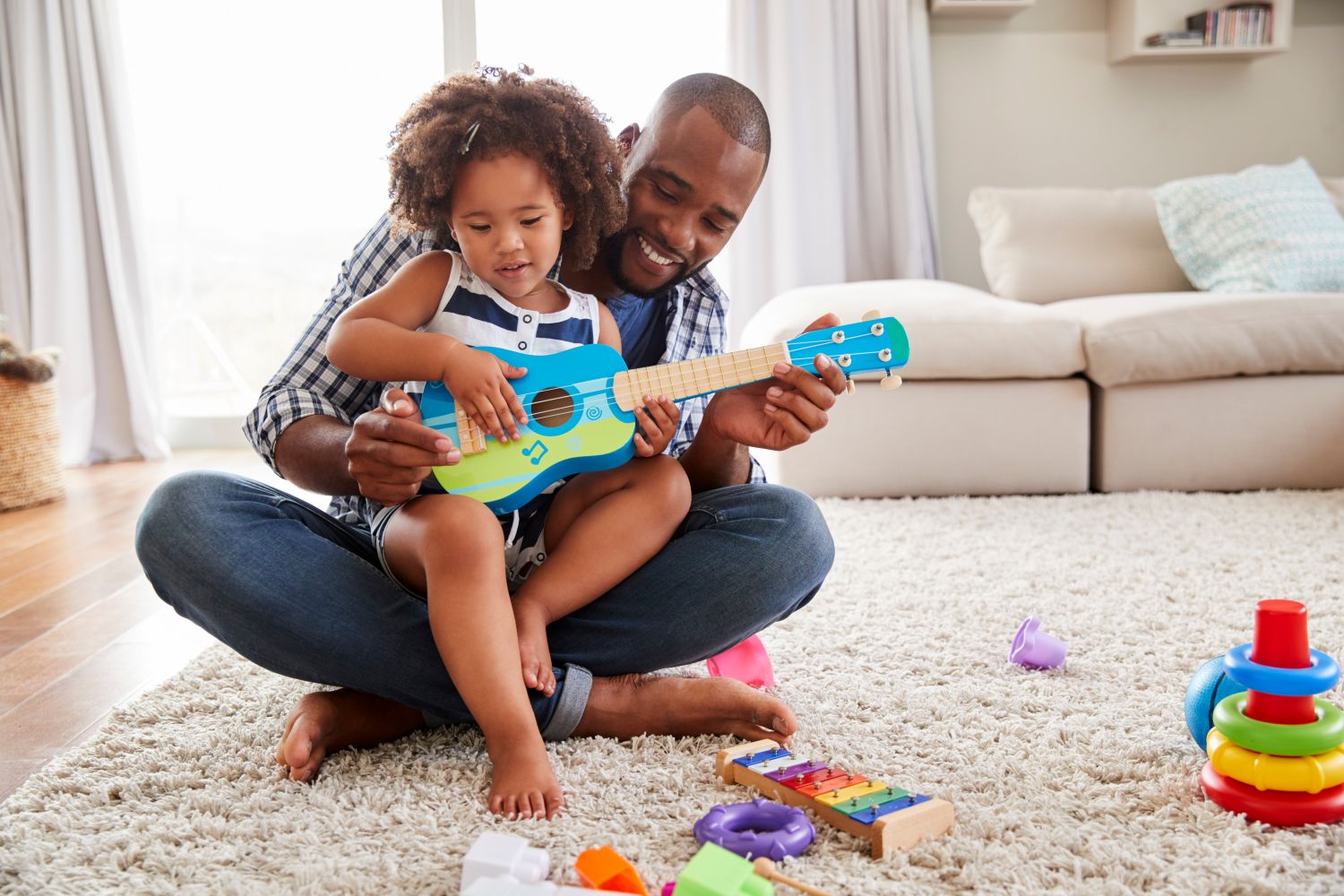
I’m home from work and cooking dinner in the kitchen of my home. The ambience is adorned with laughter, shouting and the light drumming of my toddler’s feet dancing across the living room to his favorite educational music videos. He’s enthralled by the music, and he loves the songs. But he’s not just enjoying the music. He’s learning. Learning more than I could ever hope to teach him without the help of music. At under 2-years old he can say nearly the entire alphabet and the sounds each letter makes. He knows all the colors of the rainbow and can count beyond ten. Not only that, but he’s also already showed major interest in different instruments, and he does his best to sing along to his favorite songs.
At this point I’m sure you’re reading and thinking that I’m just here to gloat about how smart I think my oldest son is, but that’s not why I’m writing this at all. Well, maybe a bit, but really all this is to say that while growing up with musicians and as a musician myself, I always knew how impactful music could be to our mood, how it could take you back in time, even how it could change your perspective. However, it wasn’t until I had kids of my own that I realized how impressive an effect it can have on cognitive, emotional and social development in early childhood. We all know that music can be more than entertainment, but are you aware of how important music can be to your little one’s development?
COGNITIVE DEVELOPMENT
Research shows that a sensory rich environment with a variety of smells, textures, colors and sounds is beneficial for early brain development. Music is one form of sensory input out of many that promotes cognitive development in your little one. The DNA of every piece of music contains patterns and sequences that are built into the melody, rhythm and lyrics. Learning to recognize patterns and place things in sequence at a young age helps build early math and reading skills. Music can also help develop your child’s language skills by teaching them new words and helping them understand their meanings. A study in 2016 found that when exposed to music the brain response of infants was sharpened in the auditory and prefrontal cortex. These areas of the brain are responsible for managing cognitive skills like controlling attention and detecting patterns. Additionally, the rhythm and patterns that makeup music are extremely beneficial in strengthening your child’s memory.
SOCIAL-EMOTIONAL DEVELOPMENT
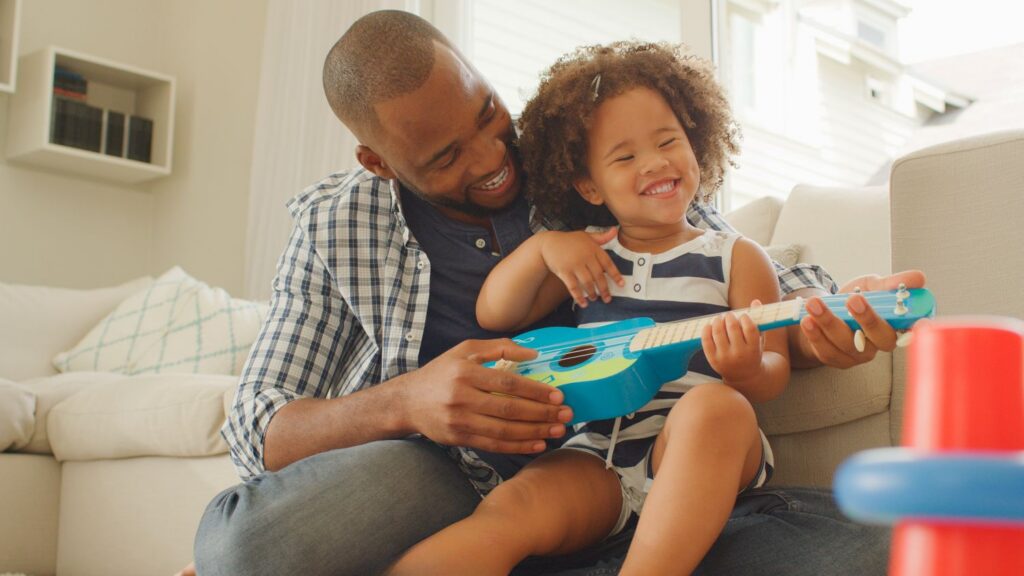
The benefits don’t stop with cognitive development though. The power of music echoes through nearly every stage of child development, including their social-emotional development. Music has been shown to improve moods in young children by reducing their stress levels, but even the cathartic power of listening to a sad song can have a positive impact on development by helping your young one get in touch with their emotions. Listening to music can even stimulate the production of oxytocin, which plays a major role in social bonding and dopamine, a neurotransmitter that helps regulate mood and behavior among many other benefits to brain function. When these hormones are released, your child may be encouraged to share, trust and empathize with others. Connecting to your baby through music can even lead to stronger social bonds with parents.
CULTURAL TRANSMISSION
The impact of music even serves to connect young children with their roots. It can transmit and help them understand not only their culture, but by listening to different genres of music they can even begin to understand other cultures. Through these avenues songs can be passed down from one generation to the next and introduce your baby to your family’s traditions and heritage in a way that goes beyond simple words or photos. Using music to connect to you and their roots can be crucial to helping them feel more safe and secure.
CONCLUSION
Music has a miraculous ability to bridge the gap between the hemispheres of your little one’s brain and promote their development in nearly every way. I’ve seen it at home with my own children. Every day I am impressed not only by how much they love music at such a young age, but by how much it’s helping them grow into incredible human beings. If or when you have children of your own, I encourage you not only to expose them to music but experience it with them. Show them your favorite songs, sing along or dance with them. You don’t have to be an expert on music or have a Grammy worthy voice. Just be an enthusiastic participant and you will be proud and awestruck by how fast they grow.
Author of the Blog – Caleb G.