

You might not think twice about the fabric or mesh stretched across your speakers. But those simple speaker grilles do more than protect the drivers. It changes the way your speakers sound and shapes how they fit into your room.
If you are a critical listener or just curious, here’s what you need to know about speaker grilles. Learn when they matter and why some manufacturers leave them off completely.
What Do Speaker Grilles Actually Do?
Speaker grilles serve two main purposes: protection and design. On the practical side, they keep dust, dirt, and stray fingers away from the delicate drivers. This is important in homes with pets, kids, or a lot of activity. But speaker grilles are also a major part of how a speaker looks.
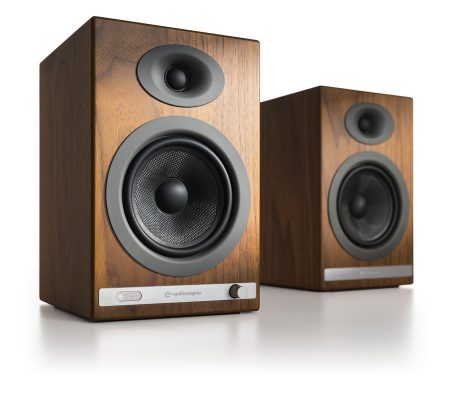
In some cases, the speaker grille adds to the look of the speaker. It can soften the sharp lines of the drivers or helps the system fit into the room. In some cases, not having a grille is the main idea. It shows the speaker’s acoustic parts clearly, like functional art.
Manufacturers can make speaker grilles from fabric, metal, plastic, or wood. They may design them to be removable or not. Regardless of the design, every grille sits directly in the acoustic path. That means it can affect what you hear, not just how your setup looks.
Yes, They Can Change the Sound
Here’s the short version: most manufacturers design speaker grille fabrics to let sound through. This is especially true for the softer woven types. The real sonic difference usually comes from the grille’s frame.
When a sound wave hits the edge of a grille frame, it doesn’t always pass through cleanly. It can diffract, meaning it bends or scatters, causing small changes in frequency response, especially in the upper mids and highs. That might result in a slightly softer or less defined sound with the grille on.
In many cases, it’s not something you’ll notice during casual listening. But if you’re sitting in a near-field position or mixing music, those changes might matter. That’s why designers create professional studio monitors without grilles; they prioritize accuracy above all else.
Not All Grilles Are Built the Same
Cloth grilles, especially thin ones stretched across lightweight frames, tend to have a minimal impact on sound. Companies often choose these to achieve a clean, understated look without dramatically changing the listening experience.
Hard grilles, like perforated aluminum or rigid plastic, can be more intrusive acoustically, but they offer stronger physical protection. For some environments, that tradeoff is worth it.
Some manufacturers go a step further, designing their drivers and crossovers to compensate for the presence of the grille. Others, like Dynaudio, tune their speakers without grilles and recommend removing them during listening for the best sound.
Even the shape and thickness of the grille frame plays a role. A thick, protruding frame creates more opportunity for diffraction. A minimal or curved frame can help reduce that effect.
So, Should You Take Them Off?
If you are listening carefully, like checking a mix or adjusting speaker placement, try removing the speaker grilles. You might notice a touch more clarity or openness in the highs.
If you have small hands, flying toys, or curious pets near your setup, you may want to keep the speaker grille on for protection. That doesn’t make your setup any less “audiophile”, it just means you’re making a choice based on how you live and listen.
Some people also prefer the aesthetic of a speaker with the grille on. Others love seeing the drivers exposed. No wrong answer exists. Your system, your sound, your space.

All part of the design.
For speaker designers, grilles are never an afterthought. They’re a balance of protection, acoustics, and aesthetics.
Some designers create speakers for visibility. Some designs blend seamlessly into your decor. Speaker grilles play a role in both outcomes.
In the end, the best grilles are the ones that don’t call attention to themselves, visually or sonically. They protect without dulling the details. They blend into the room without hiding the character of the sound.
What About Audioengine?
At Audioengine, our HD Series Home Music Systems and S6 Subwoofer feature removable magnetic speaker grilles. They’re built from acoustically transparent fabric stretched over low-profile frames that minimize diffraction. You can keep them on for good performance. Or, you can take them off for the clearest sound and a better view of the drivers inside.
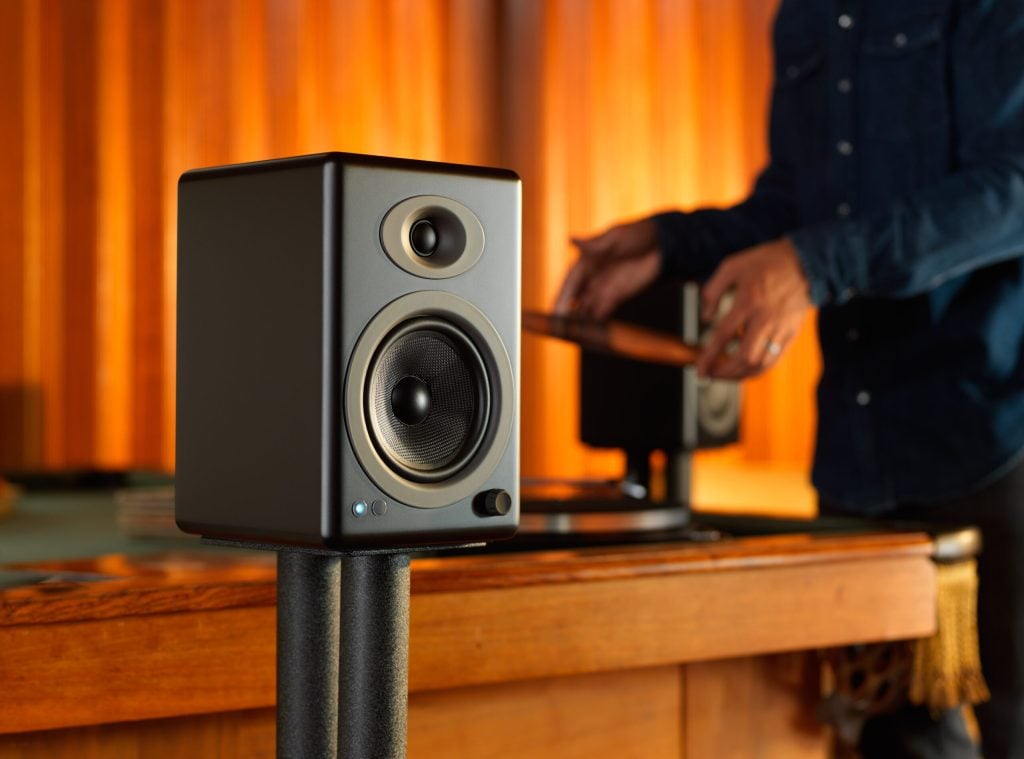
We know not every setup is the same. Your gear should fit your needs. Whether you are at a desk, in a living room, or near a turntable, it should adapt to you.
Grilles or no grilles, the goal is the same: bring music to life.