
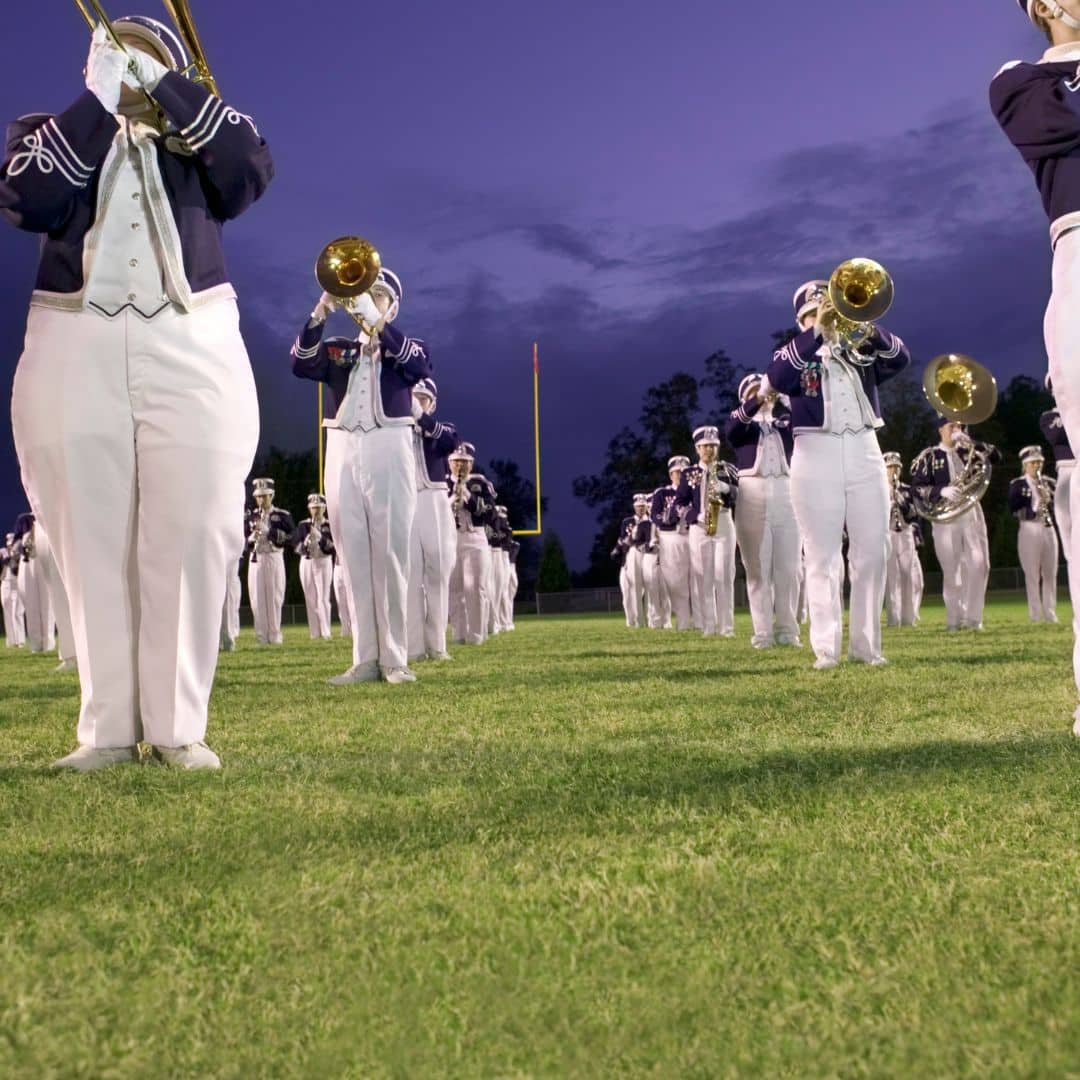
For generations of football fans, game day has included more than the action between the goal lines. Long before the game starts, brass, drums, fight songs, and school anthems signal that the stadium is coming to life. Marching bands have become so closely tied to American football that it is hard to imagine a college or high school game without them.
From the Battlefield to the College Campus
Marching music has military roots stretching back centuries. Armies used drums, fifes, bugles, and other instruments to relay commands, maintain cadence, and boost morale. Documented military marching bands trace back to the Ottoman Empire in the 13th century, while fife-and-drum corps became familiar in Revolutionary-era America. By the 19th century, military-style bands were common at American colleges, especially schools connected to cadet programs.
That connection helped bring marching music into early college football. Notre Dame’s Band of the Fighting Irish, founded in 1845, is often recognized as the oldest college marching band in the United States. The band performed at Notre Dame’s first football game in 1887, helping establish music as part of game day.
Who Played the First Football Halftime Show?
The answer is not as simple as it might seem.
The University of Illinois is widely credited with presenting the first organized marching band field show at a football game in 1907. Led by band director Albert Austin Harding, the Illinois Regimental Band took the field against the University of Chicago and performed formations that included the “Block I.” The University of Illinois describes the performance as the beginning of the American football halftime marching band tradition.
Historical research suggests there may have been earlier examples. Football Archaeology points to Nebraska’s cadet band, which played at football games in the 1890s. Newspaper accounts confirm that the Nebraska band played during intermission in 1895, although surviving evidence does not clearly establish whether the musicians marched on the field during halftime. That distinction is why Illinois remains the better-documented milestone.
Marching Bands Learn to Use the Field
The early 1900s changed what a marching band could be. Military formations traditionally emphasized straight lines, precise ranks, and disciplined movement. College bands began experimenting with formations designed for spectators.
In 1907, Purdue’s All-American Marching Band helped push that change by moving beyond standard military drill and creating pictorial formations. Fight songs also became a major part of college sports during this period. Bands were now helping build school identity, rally crowds, and turn football games into shared rituals.
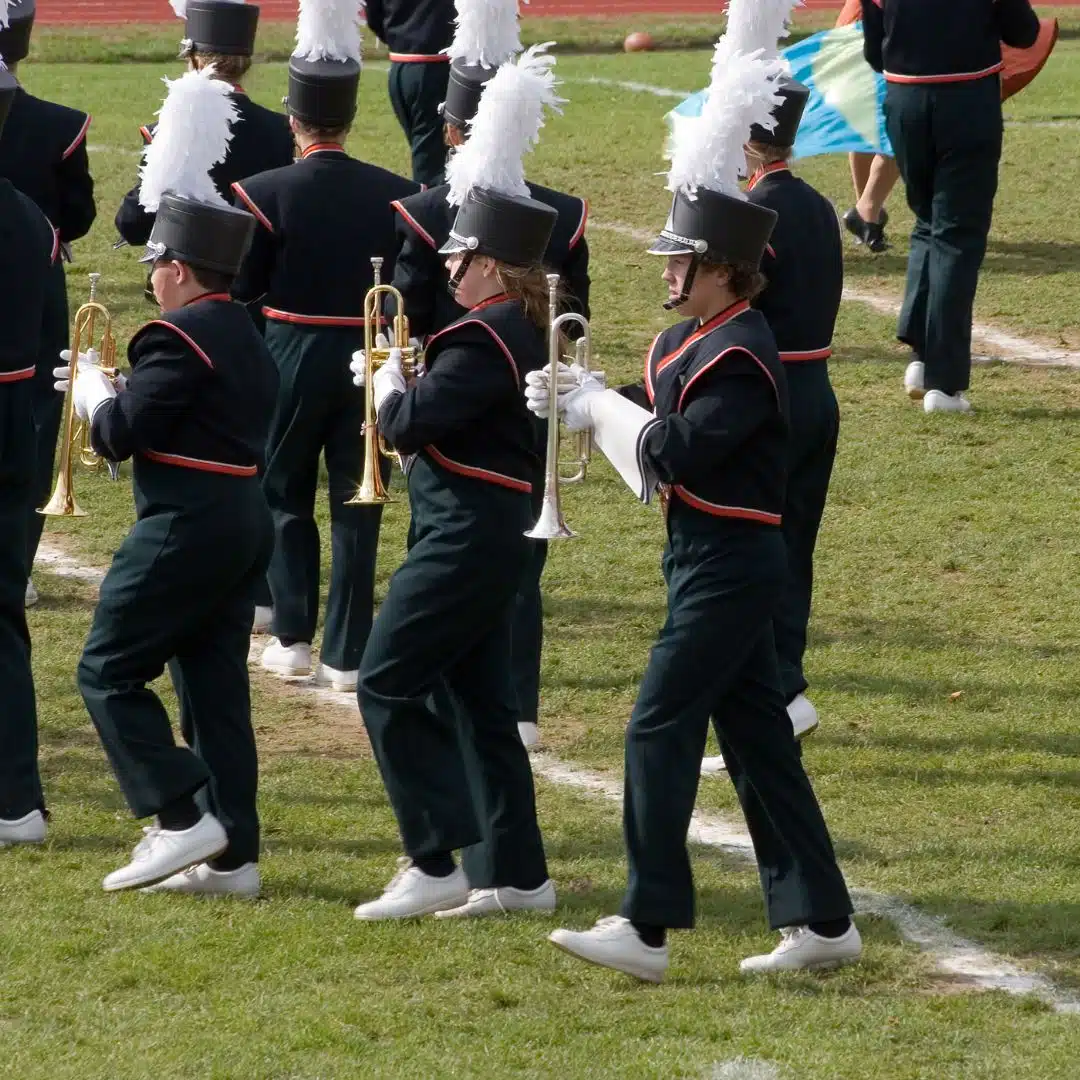
By the middle of the 20th century, college football marching bands were producing increasingly elaborate shows built around music, choreography, recognizable shapes, and school traditions. Drum majors, color guards, sousaphones, percussion sections, and large brass lines became familiar sights in stadiums across the country.
From College Stadiums to the Super Bowl
Marching bands eventually reached professional football’s biggest event. The first AFL-NFL World Championship Game, later called Super Bowl I, featured bands from the University of Arizona and Grambling College as part of the entertainment.
College bands remained part of early Super Bowl productions. Marching bands from different colleges performed at the first 24 Super Bowls. Over time, the Super Bowl halftime show shifted toward major recording artists and pop productions, but marching bands never disappeared completely. College bands still appear alongside contemporary performers, connecting today’s spectacle to a tradition more than a century old.
Why Marching Bands Still Matter to Football
Marching bands do something recorded music cannot fully replace. They react to the game in real time. They play after touchdowns, lead fight songs, answer rival bands, fill breaks in the action, and give thousands of fans a common rhythm.
They also connect music to a place. A fight song belongs to a school. A drum cadence can tell longtime fans exactly who is coming down the tunnel before they see the uniforms.
That may be the biggest reason marching bands have endured. Football has changed dramatically since the late 1800s, yet the combination of sport, music, and school pride still works.
More than a century after bands first began appearing beside college football fields, the marching band remains one of game day’s most recognizable sounds. The arrangements have grown more complex and halftime productions more technical, but the basic idea remains the same: when the band starts playing, everyone in the stadium knows who they came to support.