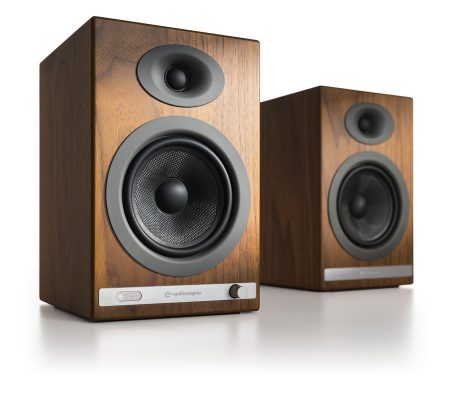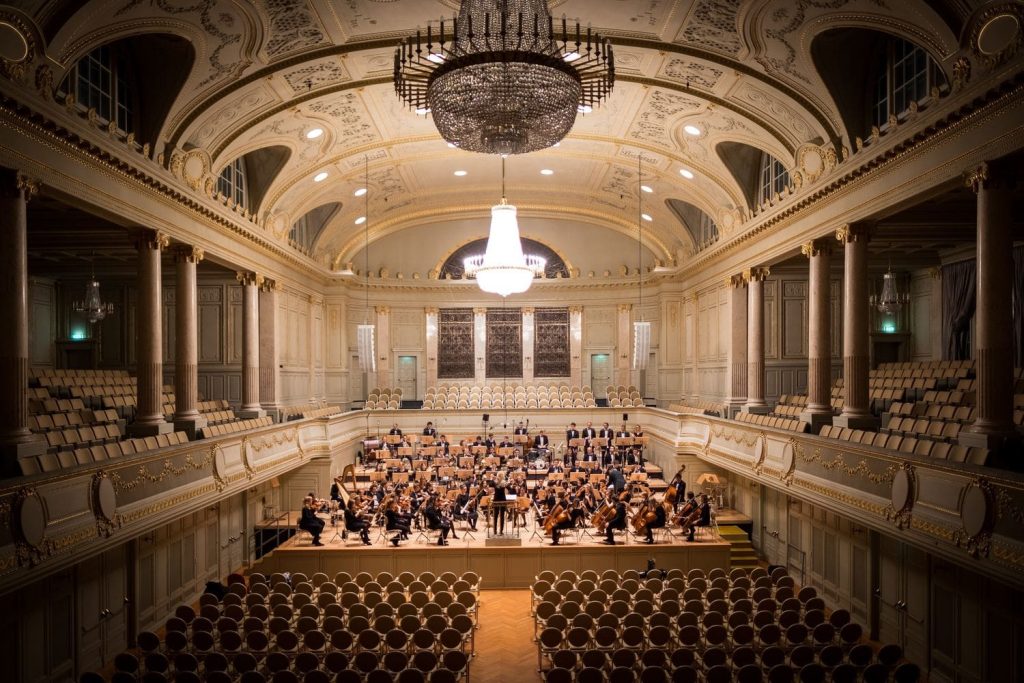

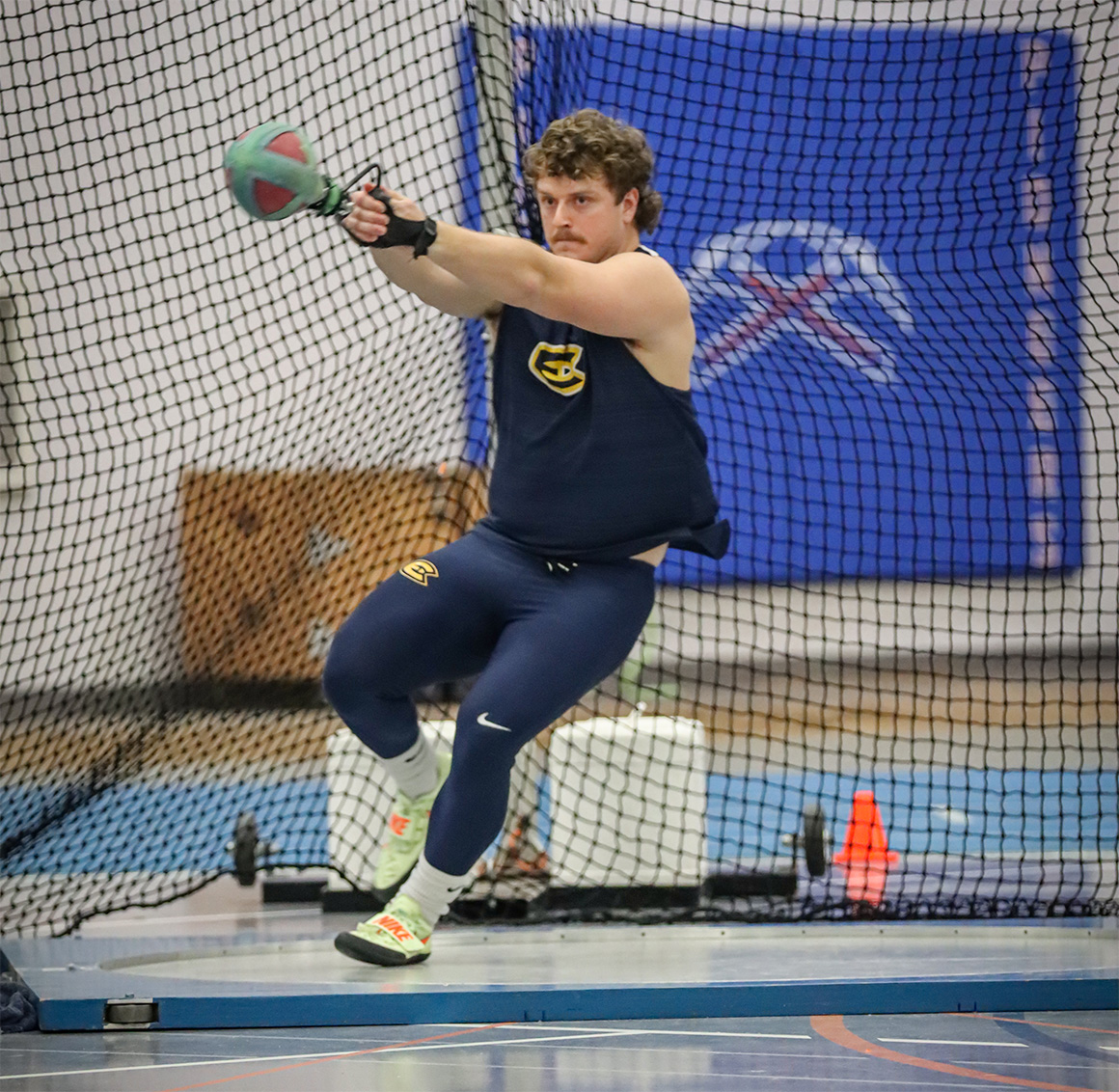
Music and sports are two distinctly different forms of entertainment, yet they are forever tethered together. Whether singing along during the 7th inning stretch, chanting a cheer for your favorite team, or watching the halftime show, music has woven itself into the fabric of competition at every level. The history of music in sanctioned athletic events stretches as far back as the earliest Olympic Games, where it played an integral role in the contests themselves. But how does music truly affect sporting events and the competitors within them? Before my time at Audioengine, I had the unique opportunity to pursue collegiate athletics at the University of Wisconsin-Eau Claire, where I was part of their powerhouse track and field program, competing in the hammer throw, shot put, and discus. Music was a constant in both my training and in those final moments before stepping into the ring. During every practice and lift, music played through any number of speakers around the facility. Before every meet, the pump-up playlist blasted through my headphones, all wrapped up by the repeating beat of The Beatles’ “Don’t Let Me Down” as I moved through the ring during my throw. Music has always been integral to my life as an athlete, and that experience is far from unique. 
Music in Practice
Is there a real reason to listen to music while training? The research says emphatically yes. A landmark meta-analysis of 139 studies found that music listening during exercise produces significantly beneficial effects, including improved mood, enhanced physical performance, reduced perceived exertion, and improved physiological efficiency (Terry 2020). The right music allows you to work harder, feel better, and recover more effectively at the same time. While those effects are clear during sport-specific practice, music hits differently in the weight room. Every time I prepared for a heavy top set, I put on “Can You Feel My Heart” by Bring Me the Horizon. The guitar riffs paired with the lyrical delivery sent my adrenaline through the roof. The moment I tried a different song, the effects diminished. The set would not move as fast, my heart rate was higher, and I felt as though I had lost strength and energy altogether. Science explains why your music has this effect. Karageorghis and Priest (2012) describe music as functioning as “a type of legal performance-enhancing drug,” noting that its ergogenic effect typically results in higher-than-expected levels of endurance, power, productivity, or strength. Prior research by Karageorghis and Terry in 1997 identified five key mechanisms through which music influences athletic performance: dissociation (diverting attention from fatigue), arousal regulation, synchronization with movement, motor skill acquisition, and the attainment of flow. When you find the song that unlocks something in you, your brain is working in your favor on multiple levels at once.
Music Before Your Competition
Listening to music before competition is the most recognized ritual for athletes, and that reputation is well earned. The marketing surrounding athletes, the guidance from coaches, and the habits of role models all reinforce the idea that a pre-competition playlist is essential. Pre-task music has been shown to optimize excitement, facilitate task-relevant imagery, and improve performance in motoric tasks (Karageorghis & Priest, 2012). Music also alters both emotional and physiological arousal, functioning as a stimulant before competition or as a sedative to calm over-anxious athletes (Karageorghis, 1999). I was able to interview two former Division I college baseball players, one who played in the minor leagues and another still actively pursuing his Major League aspirations. Boomer Whiting, a former player at the University of Louisville, described music before a game this way: “Music gets me in the zone and focused for a game or workout unlike anything else. My situation, circumstances, and location can remain the exact same, but the right music will instantly change my outlook and attitude. Music connects me with deep feelings that motivate and hyper-focus me for competition.” Not every athlete uses music to get hyped. Many use it to focus and quiet the noise. My longtime friend and current pitcher Alex Buchanan put it simply: “Listening to music before a baseball game helped me to quiet my mind, visualize success, and create the internal state that I wanted to have when I eventually stepped out on the mound.” Both responses are scientifically grounded. The same body of research confirms that music can serve both functions, stimulating or calming, depending entirely on what the athlete needs and what they select. 
Music During a Game
Not all sports allow athletes to listen to music during competition, but once the game begins, the music does not stop. It simply moves from the athlete’s headphones to the stands. Fan chants and fight songs are blasted through stadium speakers, and the collective roar of a crowd are all forms of sound that land directly on the competitor, and the effect is significant. This is known as the audience effect. Research has established that the energy and activation level of the crowd has a direct, positive correlation with the arousal and performance of the athletes, meaning a more engaged and excited audience produces stronger athletic performance and more intense competition overall (Strauss & MacMahon, 2013). Simply put, loud fans make for more entertaining games, and they make better athletes in the process. According to sport psychologist Richard Walker of Georgia Tech, the roar from the stands can push adrenaline and grit, helping athletes squeeze just a little bit more out of their tired bodies. A study examining the role of crowd noise found it to be one of the key components contributing to home-field advantage, alongside pitch familiarity, with home crowds providing a measurable psychological and performance boost to the athletes playing in front of them. Of course, the effect cuts both ways. Research examining cheers versus jeers found that hostile audience behavior hurt performance for baseball pitchers and golfers, while basketball players’ free throw percentages remained relatively unaffected, suggesting that crowd noise impacts athletes differently depending on the precision demands of their sport (Epting et al., 2011). For athletes performing high-stakes, fine motor tasks like a penalty kick or a bases-loaded pitch, crowd noise can become a source of significant pressure that, without psychological skills to counteract it, leads to performance decrements (Galanis et al., 2018). The athlete’s relationship with crowd sound, then, is a dynamic and ever-changing one. For some, the noise is fuel to perform their best. For others, it is something to be tuned out and managed, or else it will have negative consequences. Walker notes that for athletes in precision sports, the absence of crowd noise can be beneficial, allowing for deeper concentration, while for others, the ambient roar functions as a form of white noise that prevents overthinking and keeps the athlete from getting into their own head. Either way, the sound of the crowd does not just make the game more exciting to watch; it has a major effect on the results on the field.
What Music Is Best for Competition?
This is where the science of music and sports got genuinely fascinating to me, and where the answer is both universal for all athletes and deeply personal to me. The foundation of performance-optimized music is tempo, measured in beats per minute (BPM). Research from Brunel University has shown that music with a tempo between 120 and 140 BPM tends to produce optimal results for most cardio and endurance activities, with a ceiling effect beyond 145 BPM, above which faster tempos no longer translate into faster performance (Karageorghis & Terry, 1997). Different phases of training and competition call for different tempo ranges. For example, during warm-ups, 100 to 120 BPM helps elevate heart rate gradually. During peak effort, 120 to 140 BPM supports most aerobic work. For cool-down and recovery, dropping into the 80 to 90 BPM range allows the body to ease back down effectively (Thakare et al., 2017). For strength sports like the throwing events I competed in, personal music preference plays an equally important role alongside tempo. Self-selected music chosen by the athlete produces significantly better outcomes in strength, explosiveness, and mood compared to researcher-assigned tracks (Biagini et al., 2012). In my experience, we were always allowed to pick our own music, but when someone on the aux put on a genre that I did not mesh with, my performance would take a small dip. The song that unlocks your best set might not be at the “textbook-optimal BPM”, but if it fires something within you, then the logic behind the song choice becomes a moot point.
Music as a Celebration
Every athlete knows the emotional weight of the post-competition moment, whether it is a win or a loss. Music plays a critical role in how we process and express that emotion, and the science supports using it intentionally in that window. From a physiological standpoint, post-exercise music can activate the parasympathetic nervous system, helping to initiate recovery as soon as competition ends. Research has shown that music listening after training positively influences psychological resilience and can accelerate the return to baseline arousal levels more effectively than passive rest alone (Terry et al., 2020). On an emotional level, celebratory music amplifies the feeling of achievement and reinforces the memory of a peak performance, strengthening the psychological association between preparation, effort, and success. For me in high school, after a big meet, our entire team would blast “Shallow” from A Star Is Born! For many, we associate the theme from Rocky as the ultimate celebration song, or the classic “We are the Champions” by Queen. For every athlete, there is a different song that brings out the celebratory emotion; some value the lyrics while others care more for the beats.
Conclusion
Music is not just used as a backdrop to an athlete’s life. It is used as background noise, a pre-game ritual, and a genuine legal performance enhancer. From the science of BPM and mental arousal regulation to the millions of first-hand accounts of athletes finding their competitive mindset in entirely different ways. Music shapes how we prepare for a game, how we compete on the field, to how we celebrate and recover. For me, it was “Gangsta’s Paradise” helping me celebrate a big throw, or a PR after a meet. For Boomer, it was the playlist that flipped his competitive switch before stepping into the batter’s box. For Alex, it is the quiet calm that settles his nerves before taking the mound. Every athlete’s relationship with music is different, but the relationship we all have with it is universal.
Listen to my Sports Soundtrack!





Author of the Blog – Brandon R

References
Biagini, M. S., Brown, L. E., Coburn, J. W., Judelson, D. A., Statler, T. A., Bottaro, M., Tran, T. T., & Longo, N. A. (2012). Effects of self-selected music on strength, explosiveness, and mood. Journal of Strength and Conditioning Research, 26(7), 1934-1938. https://doi.org/10.1519/JSC.0b013e318237e7b3
Karageorghis, C. I. (1999). Music in sport and exercise: Theory and practice. The Sport Journal, 2(1). https://thesportjournal.org/article/music-in-sport-and-exercise-theory-and-practice/
Karageorghis, C. I., & Priest, D. L. (2012). Music in the exercise domain: A review and synthesis (Parts I and II). International Review of Sport and Exercise Psychology, 5(1), 44-84. https://doi.org/10.1080/1750984X.2011.631026
Karageorghis, C. I., & Terry, P. C. (1997). The psychophysical effects of music in sport and exercise: A review. Journal of Sport Behavior, 20(1), 54-68.
Terry, P. C., Karageorghis, C. I., Curran, M. L., Martin, O. V., & Parsons-Smith, R. L. (2020). Effects of music in exercise and sport: A meta-analytic review. Psychological Bulletin, 146(2), 91-117. https://doi.org/10.1037/bul0000216
Thakare, A. E., Mehrotra, R., & Singh, A. (2017). Effect of music tempo on exercise performance and heart rate among young adults. International Journal of Physiology, Pathophysiology and Pharmacology, 9(2), 35-39.