

An International Ensemble
Before the first whistle, there are songs in the street, drums outside the stadium, playlists in the living room, and chants that travel from one generation of fans to the next. The matches may happen on the pitch, but the culture around it lives in the music around the world. A Brazilian samba line passes a group of chanting English fans, while a wall of West African drums sets the rhythm for everyone in earshot. It’s a beautiful, chaotic remix where entirely different musical worlds collide.
The Rhythms of Brazil
If you want to look at the absolute gold standard of where music and soccer become inseparable, you start in Brazil. The relationship relies on Samba; a genre rooted in West African religious traditions and developed in Rio de Janeiro favelas during the early 20th century. Characterized by its syncopated 2/4 rhythm and polyrhythmic percussion, Samba is driven by specific instruments: the heavy thud of the surdo (bass drum), the sharp crack of the repinique (tenor drum), and the unmistakable metallic rattle of the chocalho.
In the 1970s and 80s, a subgenre called Pagode emerged in Rio. Pagode took the grand, celebratory nature of traditional Samba and made it more intimate, using instruments like the tan-tan (a hand drum replacing the heavy surdo) and the banjo cavaco.
In 1972, legendary musician Jorge Ben Jor watched Flamengo forward Fio Maravilha score a breathtaking solo goal against Benfica. Ben Jor went straight to the studio and recorded a song naming the track after the player. The track became a massive hit, immortalizing the artistry of Brazilian football in a global anthem.
European Sonic Terrace Chants
In European football culture, the stadiums are filled with the voices of fans functioning as a massive, open-air amphitheater for modern Folk Music and Terrace Anthems. The European sound is defined by sheer volume, unison, and a call-and-response vocal delivery that closely mimics traditional choir singing. Instead of polyrhythms, European fan culture relies on synchronized clapping, localized bounces, and driving brass instruments.
The Melodic Anthem – Usually a pop track hijacked by fans and sung at the top of their lungs with lyric swaps to represent their team, or mock the visiting teams.
Traditional Brass: features cornets, trombones, and euphoniums that march around the grounds to set the tempo for the crowd.
Africa’s Pulse: Afrobeats, Highlife, and the Drums
Shifting the focus to the African continent expands the stadium soundtrack into a massive masterclass of rhythm, energy, and non-stop movement. In African soccer culture, from the western coast to the southern stadium bowls, music is an endurance test. It is a 90-minute force designed to inject pure energy directly into the players on the pitch.
The foundation of this sound rests on highly percussive regional genres, from West African Highlife and Afrobeats to Southern African Kwaito and Amapiano. These genres rely on a heavy dialogue between traditional percussion and modern electronic basslines.
In the stands, this music is driven by a relentless live engine: the deep resonance of the djembe, the sharp patterns of talking drums, driving brass horn sections, and regional stadium fixtures like the vuvuzela or traditional whistles.
When the global tournament came to African soil for the first time in 2010, the continent introduced the world to the vuvuzela. This traditional plastic blowing horn produces a loud, monotone drone resembling a massive swarm of bees. While it polarized international television broadcasters, it was an authentic sonic marker of South African soccer culture. Rather than singing traditional Western chants, the crowd used the relentless, collective roar of the horn to create an intimidating wall of sound that physically altered the atmosphere of every match.
The Global Symphony of the Beautiful Game
There is truly nothing else in the sporting world quite like this. Every four years, soccer pulls off a feat that no other sport can match, transforming a single tournament into a living, breathing archive of global music culture. From the improvisational samba lines of Brazil and the towering, operatic choir sections of Europe to the relentless, high-energy drumlines of Africa. They bring their heritage, their instruments, and their unique regional rhythms to the stands, reminding us that while the rules on the pitch never change, the soundtrack around it is beautifully diverse.
You don’t have to buy a plane ticket or sit in a crowded stadium to experience that incredible energy. Whether you are blasting a legendary pagode track before kickoff, singing along with a roaring terrace anthem at halftime, or diving into the heavy percussion of modern Afrobeats after the final whistle, you can bring that exact global atmosphere right into your living room.
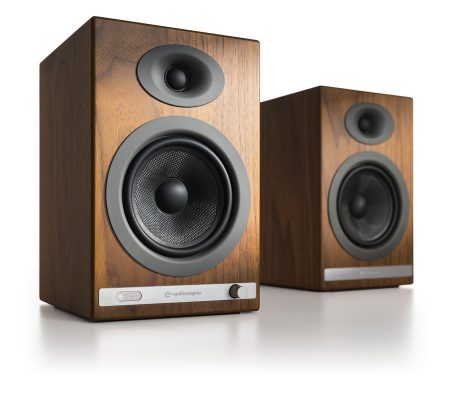
At Audioengine, we believe music has a way of giving a room its own pulse. That is especially true when the beautiful game is on. Our speakers are engineered to capture the full depth of the game, from the deepest rumble of a stadium drum to the crisp clarity of a clear-throated chant, giving your space the power and soul it needs to make you feel like you are standing right in the center of the world’s greatest block party.